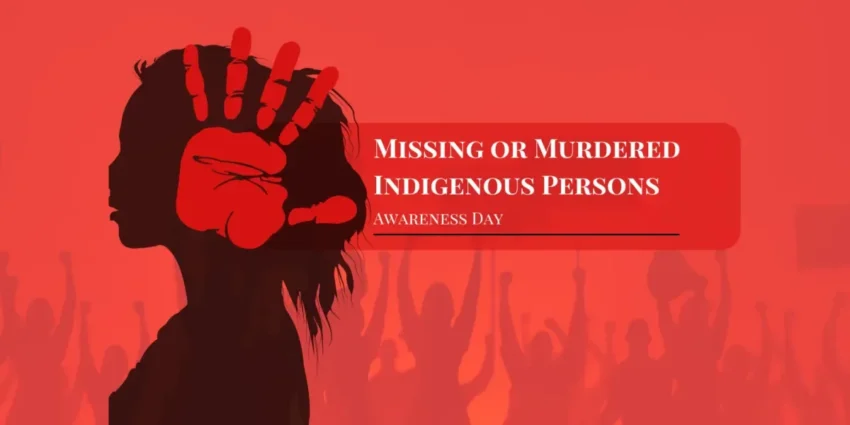
LANSING, MI — Michigan advocates and tribal law enforcement officials are pushing for greater attention to cases involving missing and murdered Indigenous people, saying the problem remains serious even as agencies work to improve their response. The U.S. Bureau of Indian Affairs estimates there are 4,200 unsolved cases nationally.
In Michigan, the issue affects a state with 12 federally recognized Indigenous tribes and a relatively small Native American and Indigenous population. Leaders say the low population count should not obscure the risks faced by families when someone disappears or is found dead, especially when cases cross jurisdictional lines or are not recorded accurately.
Officials and advocates say recent coordination efforts are helping, but they also stress that the work is far from finished.
Tribal police say readiness plans can speed a response when someone disappears
Terrence McDonnell, chief of police for the Little Traverse Bay Bands of Odawa Indians in Harbor Springs, said some tribes have broad response plans ready for an emergency missing person case. He said those plans are not just about police work, but also about victim and survivor support.
McDonnell described the framework as a way to prepare law enforcement and human services staff before a crisis unfolds. That preparation matters because investigators may have only a short window to gather useful information after a person is reported missing. Tribal agencies, he said, are trying to make sure they are equipped to act quickly if one of their members disappears.
He called the issue both serious and growing, and said officers are working to stay ready even when they are not actively handling a case.
State summit in Traverse City brought together tribal, federal and local officials
The Michigan Attorney General’s Office recently hosted the annual Missing and Murdered Indigenous Persons Summit in Traverse City. McDonnell said the meeting drew a wide range of participants, including representatives from tribal law enforcement, human services, federal agencies and state government.
According to McDonnell, the event created a place for agencies to compare notes, share stories and discuss best practices. He said that kind of coordination is important because no single department can solve every case on its own.
McDonnell also said the Attorney General’s Office and the federal government have been working for years to improve how these cases are handled. He pointed to two federal officers assigned between the tribes and based in the tribal police department in Mount Pleasant as one example of that effort.
Limited resources and underreporting remain major obstacles nationwide
Ronald Carrick, chief of police for the Bay Mills Police Department in Brimley, said tribal agencies across the country often do not have enough staff or resources to devote fully to every missing persons case. That shortage, he said, is one reason so many cases remain unsolved.
Carrick said the federal response began to take shape after Savanna’s Act was signed into law in 2020. The law was named for Savanna LaFontaine-Greywind, a 22-year-old member of the Spirit Lake Tribe in North Dakota who was murdered in 2017. Investigators took eight days to find her body.
The law was meant to improve how authorities investigate missing and murdered Indigenous people and to strengthen federal guidelines. Carrick said underreporting is still a major problem, however, because many cases never get the public attention families need.
A Bay Mills case this year underscores the stakes for tribal families
The Bay Mills Indian Community is dealing with one such case this year. Druid Lake Warner, a 21-year-old tribal citizen, was found dead in June at Naomikong Point in Bay Mills.
According to a Facebook post by the Bay Mills Police Department, officers began searching as soon as he was reported missing. Police said the cause of death is still unknown and remains under investigation.
For tribal officials, the case reflects the urgency behind the broader push for better coordination and faster response. Even when investigators move quickly, families may still face long waits for answers, especially when a death remains unexplained.
Officials warn that missing records can hide the true scale of the problem
Advocates say the absence of unsolved Indigenous homicide cases in Ottawa County police records should not be read as proof that no one has been affected. They argue that missing or inaccurate data can hide the real scope of the crisis.
Across West Michigan, they say, database errors and jurisdictional boundaries have long complicated these investigations. In national systems such as NamUs and the National Crime Information Center, Indigenous victims have sometimes been misclassified as White, Hispanic or of unknown race, which can bury cases in flawed paperwork.
Those problems are made worse in places without federally recognized reservation land, where local agencies operate through county and municipal systems rather than tribal police databases. State and tribal officials are now working to address those gaps through the Michigan Department of Attorney General’s Missing or Murdered Indigenous People Task Force, which includes federal agents, state police and tribal leaders such as representatives of the Grand River Bands of Ottawa Indians.